
I know that specific gut-punch feeling. It sits in your stomach like a brick when you squint at your phone, probably at 7:45 AM and realize you completely blew it. You overslept. Now, that fragile house of cards you built (balancing AP bio, varsity drills, and maybe sleeping occasionally) is shaking violently. In these moments, time feels like a personal enemy. It seems like some hefty, unyielding force designed specifically to wreck your college chances. But here is the truth. Time isn't out to get you. It is a system. Just like a physics equation or a broken toaster, you can actually take it apart. It turns out you just need to learn how the gears mesh together to make it work.
I want you to stop staring at those numbers on your screen. Seriously. I know we treat 7:00 AM like it is a physical object, as real as the heavy textbook in your bag but it is total fiction. It is a construct. To me, it looks like a massive, shaky agreement humanity signed just to keep the trains running. So, when you are grinding for that 4.0 or trying to lead a team, you are essentially wrestling with a ghost. Here is the thing. Understanding the messy mechanics, why we slice the day in half, why the world syncs to a specific neighborhood in London, and what "mean time" actually implies. Gives you a strange sort of leverage. It makes the abstract concrete. Let us see what makes the clock tick.
1-1 The Latin Code: Decoding AM and PM
We slice our chaotic lives into two distinct chunks. There is the morning scramble, usually fueled by too much caffeine and low-level anxiety and then the evening grind of homework and extracurriculars. We mark these territories with two simple abbreviations: AM and PM. You see them every day. You scribble them on your planners. But I suspect you rarely stop to consider their origins. They are not just arbitrary letters. They are Latin, dusty remnants of a time when the sun was the only clock that actually mattered. AM stands for Ante Meridiem. PM stands for Post Meridiem. The heavy lifting here is done by Meridiem, which translates roughly to "midday" or "noon."
Let us try to visualize this (it helps to look up). Imagine the sky is a massive dome sitting right over your head. The sun drags itself up in the east, climbs to its absolute highest point, and then sinks down in the west. That highest point? That is the meridian. It is an invisible line cutting the sky in half. So, when your alarm screams at 6:30 AM, you are existing in the time before the sun crosses that line. When you are finishing up soccer practice at 4:30 PM, you are living after the crossing. It is a binary system based entirely on where a massive star sits relative to your specific spot on Earth. Simple, right?
It turns out, the whole setup is a disaster. The catch is simple: this system practically begs for confusion. I know I have stared at a deadline marked "12:00 PM" and panicked, wondering if that meant lunch or the middle of the night. You probably have too. Technically, noon is the meridian itself, the line. So it is neither before nor after. But by convention? We just decided to treat 12:00 PM as the start of the afternoon. It is a messy, human patch on an astronomical problem. To me, it feels just like the college admissions racket. Rules that feel totally arbitrary, yet you have to play by them to win. This 12-hour cycle is deeply ingrained in our heads, but let us be honest: it is a clumsy way to run a modern world. That is why the military switched to a 24-hour clock. It kills the ambiguity. But for most of us? We are stuck fumbling with the Latin split.
1-2 The Chaos Before Order
I want you to imagine a world without a standardized clock. Picture yourself wrangling a group project where every single member is running on a slightly different timeline. Not just different schedules, but literally different times. Your watch hits 3:00. Your partner claims it's 3:12. Another guy insists it is 2:50. It sounds like a total nightmare scenario for getting anything done, but this was the actual reality of the early 19th century. Before we nailed down Greenwich Mean Time, every town in England (and the rest of the world) kept its own local time based on the sun5.
Look at the absurdity of solar time. When the sun hit its peak in Bristol, it was noon. But in London, a hundred miles east. That moment passed ten minutes ago. So, Bristol's noon was London's 12:10 PM. Now, this didn't matter when you were stuck on a horse. The trip took so long the difference was a joke (you just fixed your watch when you arrived). But then the trains showed up. It turns out, speed changes everything. The Industrial Revolution brought engines tearing across the countryside fast enough to make those disjointed minutes actually dangerous. Suddenly, a train leaving London arrived in Bristol at a time that looked impossible on local clocks. It was chaos. Absolute chaos.
You can see the parallel to your own life. When you have too many conflicting priorities. SAT prep, volunteering, family obligations and no central organizing principle, everything clashes. You miss deadlines. You burn out. The Victorians faced the same problem on a macro scale. They needed a standard. They needed a single, unifying reference point that everyone could agree on, regardless of where the sun actually was in their sky. They needed a "Prime Meridian." And because Britain was the maritime superpower of the age, dominating the seas and trade routes, they decided that this reference point would be right in their own backyard.
1-3 The Center of Time: Greenwich
Enter the Royal Observatory in Greenwich, London. If you were to visit today, you would see a laser line projecting out from the observatory, cutting through the night sky. This marks the Prime Meridian—Longitude 0°. It is the starting line for the entire world's geography and timekeeping. In 1884, at the International Meridian Conference in Washington D.C., nations from around the globe gathered to decide where this line should be.4 It was a bit like a Model UN conference, but with higher stakes. France wanted the line in Paris. The US had already been using Greenwich for its own charts.2
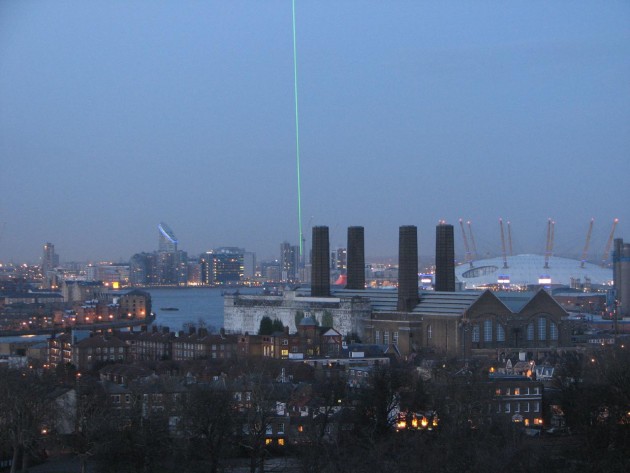
Image Creator: Graham Dolan Copyright: Graham Dolan
The decision to place the Prime Meridian at Greenwich was pragmatic. At the time, a staggering 72% of the world's commerce depended on sea charts that already used Greenwich as the zero point.2 To change it would have required reprinting nearly every map on the planet. So, Greenwich won. It became the center of the world's time. This is what we call Greenwich Mean Time (GMT). It is the time at that specific line of longitude. Every other time zone is defined by its distance from Greenwich. New York is five hours behind (GMT-5). Tokyo is nine hours ahead (GMT+9). It is a global grid that keeps the world synchronized.
I find it fascinating that we still rely on this Victorian decision. When you check the time for an international Zoom call or look up when a Premier League game starts, you are referencing a system established when men wore top hats and steam was the cutting-edge technology. GMT is the anchor. It is the constant. Even though we now technically use Coordinated Universal Time (UTC) for scientific precision which is based on atomic clocks rather than the rotation of the Earth. GMT remains the cultural touchstone.6 It is the legacy code running in the background of our civilization.
1-4 The "Mean" in Mean Time
Here is where things get technically interesting. You might have noticed the word "Mean" in Greenwich Mean Time. It seems like an odd choice of words. Is it "mean" as in nasty? "Mean" as in significant? No. It is "mean" as in average. This is a concept you encounter in math class, but its application here is profound. You see, the sun is a terrible clock. It is unreliable. It is inconsistent. If you built your life strictly around the moment the sun hit its highest point (Solar Noon), you would find that the length of your days would fluctuate throughout the year.
This happens because of two factors: the Earth's elliptical orbit and its axial tilt.1 We are not spinning in a perfect circle around the sun. We are moving in an oval. When we are closer to the sun, we move faster. When we are further away, we move slower. Simultaneously, the Earth is tilted on its axis. These two variables mean that a "true" solar day, the time between one solar noon and the next is rarely exactly 24 hours. Sometimes it is 23 hours, 59 minutes, and 40 seconds. Other times it is 24 hours and 20 seconds. This discrepancy is called the "Equation of Time."1
Imagine trying to program a computer or run a train schedule with days that change length every single week. It would be impossible. The system would crash. So, astronomers did something clever. They did the math. They took the length of every solar day in a year, added them all up, and divided by the number of days. They calculated the average length of a day. That average is exactly 24 hours. This artificial, mathematical average is what we call "Mean Time."3
Here is the reality. GMT is not the time on that sundial at Greenwich. It is the time on a mechanical clock that has been smoothed out to run at a constant rate. Think of it as an idealization of time. A perfect, steady rhythm we forced onto an imperfect, wobbling planet. I love this concept because it represents my refusal (and yours) to be at the mercy of nature's messy inconsistencies. We created our own stability. We built a tool that tells us what time it should be, rather than listening to what the sun says it is.
1-5 Why This Matters to You
I know exactly what you're asking. Why does any of this matter to a modern teenager? You have a phone in your pocket that updates itself. You certainly don't need to calculate solar noon just to find your chemistry lab. But I would argue that grasping this forces a hefty shift in perspective. One you actually need. I see you living inside a world defined by artificial constructs (like that rigid bell schedule). Those deadlines are just "mean time." They are clumsy systems designed to wrestle order out of the messy chaos of human life.
Here is the cold truth about that crushing pressure you feel. Time is just a metric we hacked together to coordinate meetings, not some divine law that you have to obey blindly. It is a tool. Think about those astronomers at Greenwich smoothing out the Earth's wobbles to build a reliable system (which I imagine was a massive headache for them), and realize you can actually build systems to smooth out the wobbles in your own life. You need to set your own "Prime Meridian". Your core priorities and measure the rest of the noise against them. That anxiety gnawing at you isn't about time. It is fear of the chaos.
References
Wikipedia. Greenwich Mean Time. Wikipedia. 2025. Available from: https://en.wikipedia.org/wiki/Greenwich_Mean_Time
Royal Museums Greenwich. What is Greenwich Mean Time (GMT) - and why does it matter?. Royal Museums Greenwich. 2025. Available from: https://www.rmg.co.uk/stories/time/greenwich-mean-time-gmt
DateTimeOnline. GMT: A Legacy of Timekeeping. DateTimeOnline. 2025. Available from: https://www.datetimeonline.com/time/what-is-gmt
AVI-8. The History of Greenwich Mean Time (GMT). AVI-8. 2025. Available from: https://avi-8.com/blogs/the-aviation-journal/the-history-of-greenwich-mean-time-gmt?srsltid=AfmBOor9naVi51GgBzUXHhs4XwZ01-s_Dex-YRTe43GyYNB9y0YkwTMV
Dictionary.com. It's Time To Learn Some Time Zone Terminology. Dictionary.com. 2025. Available from: https://www.dictionary.com/articles/time-zone-terminology
Time and Date. What is the difference between GMT and UTC?. Time and Date. 2025. Available from: https://www.timeanddate.com/time/gmt-utc-time.html
Perfectly Spoken. Time Zones: how time changes across the world. Perfectly Spoken. 2025. Available from: https://perfectlyspoken.com/blog/time-zones-and-how-time-changes/